Clinical Notes, Patient Records & Billing
Connect registration, scheduling, and reminders with EHR documentation (reviewed by clinicians), coding, and billing.
View Medical Practice Page →Turn scattered tools, repetitive work, and big ideas into practical business systems. Cayer Group helps you identify the right AI opportunities, design better workflows, and move forward with a clear implementation plan.
Business strategy. Better systems. Practical AI.

Designed around your team’s daily decisions, customer commitments, and operational workflows.
Every business moves through three essential stages: Front-Office Intake → Daily Delivery → Billing & Reporting. Because a medical clinic, a dental practice, and an HVAC contractor operate in completely different worlds, we built dedicated pages in each industry’s own language.
Connect registration, scheduling, and reminders with EHR documentation (reviewed by clinicians), coding, and billing.
View Medical Practice Page →
Keep hygiene and doctor chairs filled, simplify chairside clinical narratives, and submit complete CDT insurance claims.
View Dental Practice Page →
Reduce patient drop-offs with automated reminders, fast voice-assisted SOAP notes, and connected package or insurance billing.
View Chiropractic Clinic Page →
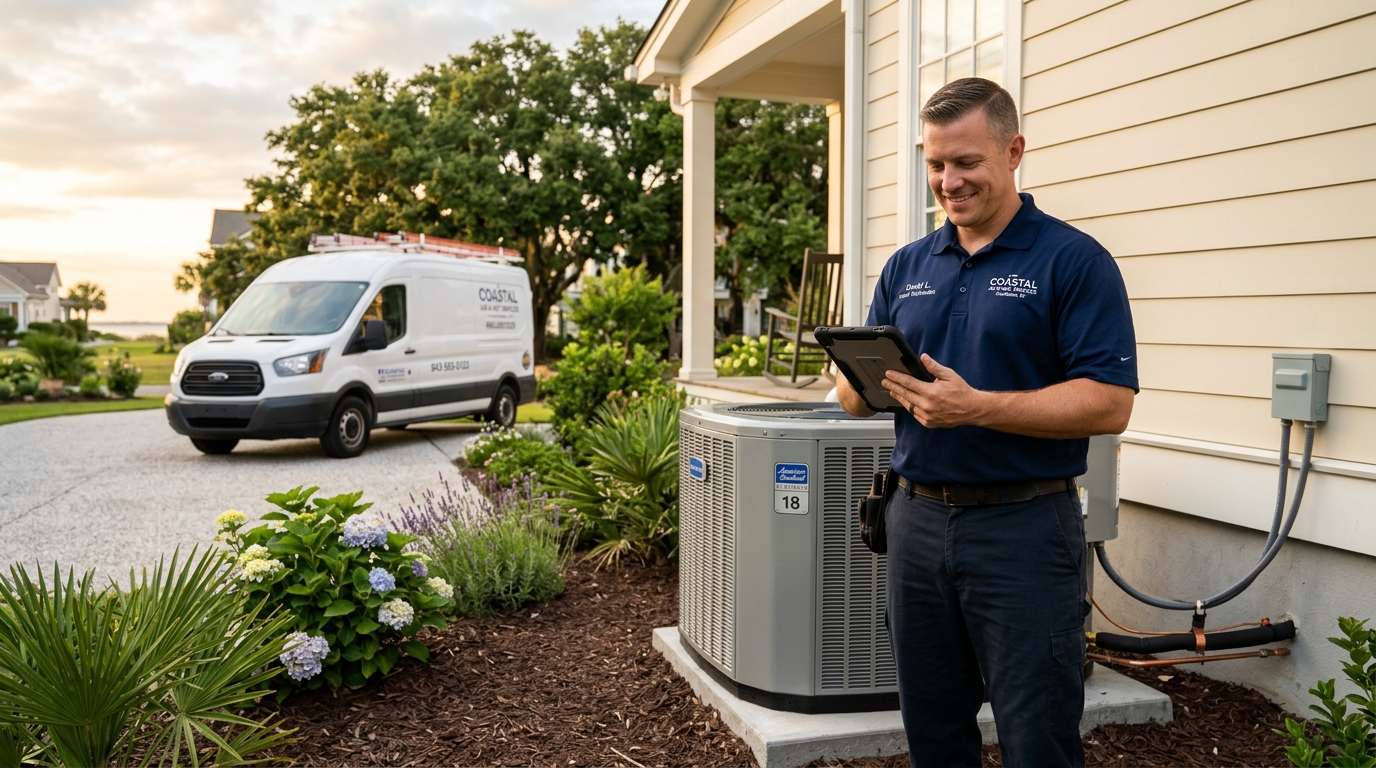
Turn missed-call text-back and short tech voice notes into clean work orders, follow-ups on quotes, and tune-up bookings.
View HVAC & Trades Page →
Streamline document collection, discovery briefs grounded in approved templates, SOP lookup, and client invoicing.
View Professional Services Page →
Led by Chef Nathaniel Cayer: plan kitchen layouts, equipment, and menus—or fix prep and food & labor costs.
View Restaurant Consulting Page →AI creates lasting value only when it fits the way your organization actually works. Select or inspect each element below to see how all four parts reinforce one another with concrete everyday examples.
Technology should support your staff—not confuse them or bypass their expertise. Clear roles define where AI assists and where a person reviews and approves.
Client Proposal Review: An account lead reviews an AI-prepared project summary, adjusts pricing terms based on client context, and personally approves the message before it is sent.
Before adding automation, we map how work arrives, who touches it, where bottlenecks happen, and what a completed handoff looks like.
Service Intake Triage: New web and email inquiries follow a standard four-step intake—capturing key details, categorizing urgency, routing to the right coordinator, and logging status automatically.
AI is only as trustworthy as the information behind it. We organize current SOPs, policies, templates, and operational records with clear access boundaries.
Approved Playbook Library: Current onboarding checklists, service agreements, and pricing guidelines are stored in one version-controlled folder so staff and AI assistants never pull outdated policies.
Placed at the right steps in a workflow, AI removes hours of manual sorting and first-draft writing while citing the exact business records it used.
Weekly Operations Brief: Every Friday morning, AI compiles open project updates, overdue tasks, and customer service trends into a two-page executive brief ready for leadership review.
From diagnostic prioritization through staff training, every engagement is built around existing tools, plain-English rules, and measurable relief for your team.
Evaluate current workflows, data quality, and team capacity to choose starting points that solve real friction first.
Eliminate duplicate entry between client intake, daily service delivery, and invoicing while keeping human approvals explicit.
Organize approved SOPs, pricing rules, and templates so staff and AI assistants pull verified answers with source links.
Assess existing platforms against new options objectively, coordinate implementation, and train staff with practical guidelines.
Every engagement is tailored to your business—your team’s capacity, your existing tools, and your operational priorities. We move in four deliberate stages so you always know what comes next.
Understand your business, goals, current systems, and sources of friction.
Compare opportunities by potential value, feasibility, cost, and readiness.
Create the workflow, system requirements, implementation roadmap, and measures of success.
Support rollout, coordinate responsibilities and specialists, help the team adopt the system, and review results.
Technology projects fail when they ignore the human and operational realities of running a business. Cayer Group approaches AI through the lens of business leadership, systems design, and practical execution.
We look at how a change in one workflow affects your team, your customers, and downstream operations—preventing isolated point-solution chaos.
Our recommendations are built for real budgets, real schedules, and real teams—bridging high-level leadership vision and day-to-day execution.
Every tool or workflow we recommend must answer a simple question: how does this make your business run better, serve clients better, or free up capacity?
New systems only succeed when the people using them feel prepared, supported, and clear on how their judgment remains central.
You never walk away with a vague slide deck. We define concrete roles, next steps, and practical roadmaps your team can execute.
You don’t have to commit to a massive transformation to find out where AI can help. An AI Business Systems Diagnostic is a structured starting engagement designed to evaluate how your business operates today and give you a clear, practical plan before you invest in new tools or complex builds.
Specific scope and deliverables are confirmed together based on your organization’s priorities and operating environment.
Depending on your goals, a diagnostic engagement can provide:
Every recommendation we make depends on your specific business goals and a careful review of your current operating environment.
Start with a real operational bottleneck—not with a software tool. We look at where your team spends too much time on repetitive intake, manual drafting, scattered information lookups, or recurring reporting. By reviewing your workflows and readiness first, we help you choose one well-defined process where AI can deliver practical relief without disrupting daily operations.
In many cases, yes. Most modern productivity suites, CRM platforms, document systems, and operational tools either include built-in AI capabilities or support standard connections. What works best depends on a review of your current environment—we evaluate what your existing software can already do before recommending any new tools or specialist integrations.
Rarely. Ripping and replacing core business software is expensive and disruptive. Our priority is to improve how your people, workflows, and existing systems work together—clarifying handoffs, organizing the information those systems hold, and adding targeted AI support only where it fits naturally.
Responsible information handling is built into every workflow we design. Depending on your environment and business requirements, we help you establish clear boundaries around what information may be used with AI tools, role-based access permissions, vendor data-usage settings, and mandatory human review before outputs are shared internally or externally. Where specialized legal, regulatory, or IT security verification is required, we coordinate directly with your internal teams or qualified compliance specialists.
Yes. A workflow is only useful if your team trusts it and knows how to run it. Rather than generic AI lectures, we provide practical, role-specific guidance built around the exact workflows your staff use every day—covering when to rely on AI, how to verify accuracy, and where human judgment is required.
Before any workflow is built or rolled out, we work with you to define clear, practical measures of success tied to your business goals—such as hours saved on recurring tasks, faster response turnaround, fewer dropped handoffs, or more consistent internal documentation. We then review real operational results after launch to verify whether the system is delivering value.
Any clinical or service organization where work moves from intake to delivery to billing benefits immediately. We work closely with medical practices (connecting patient registration, EHR clinical encounters, AI clinical documentation, medical coding, and billing), dental practices (hygiene recall, chairside charting, and insurance claims flow), chiropractic and wellness clinics (recurring care plan scheduling, automated reminders, and fast SOAP notes), and small businesses like HVAC and trades (customer call intake, technician dispatch, field notes to same-day estimates, invoicing, and seasonal maintenance follow-ups).
When front-office intake, daily delivery notes, and billing stay connected, staff spend fewer hours re-entering the same details, automated reminders help reduce missed appointments or dropped calls, and completed work reaches invoicing with less delay.
Tell us where work gets stuck, what takes too much time, or what you want your business to do better. We’ll start there.
Every inquiry is reviewed directly by Karen Cayer and the Cayer Group advisory team.
We begin by listening to how your business operates and discussing whether a diagnostic or consulting engagement makes sense.